
FTTP vs FTTC: what is the difference?
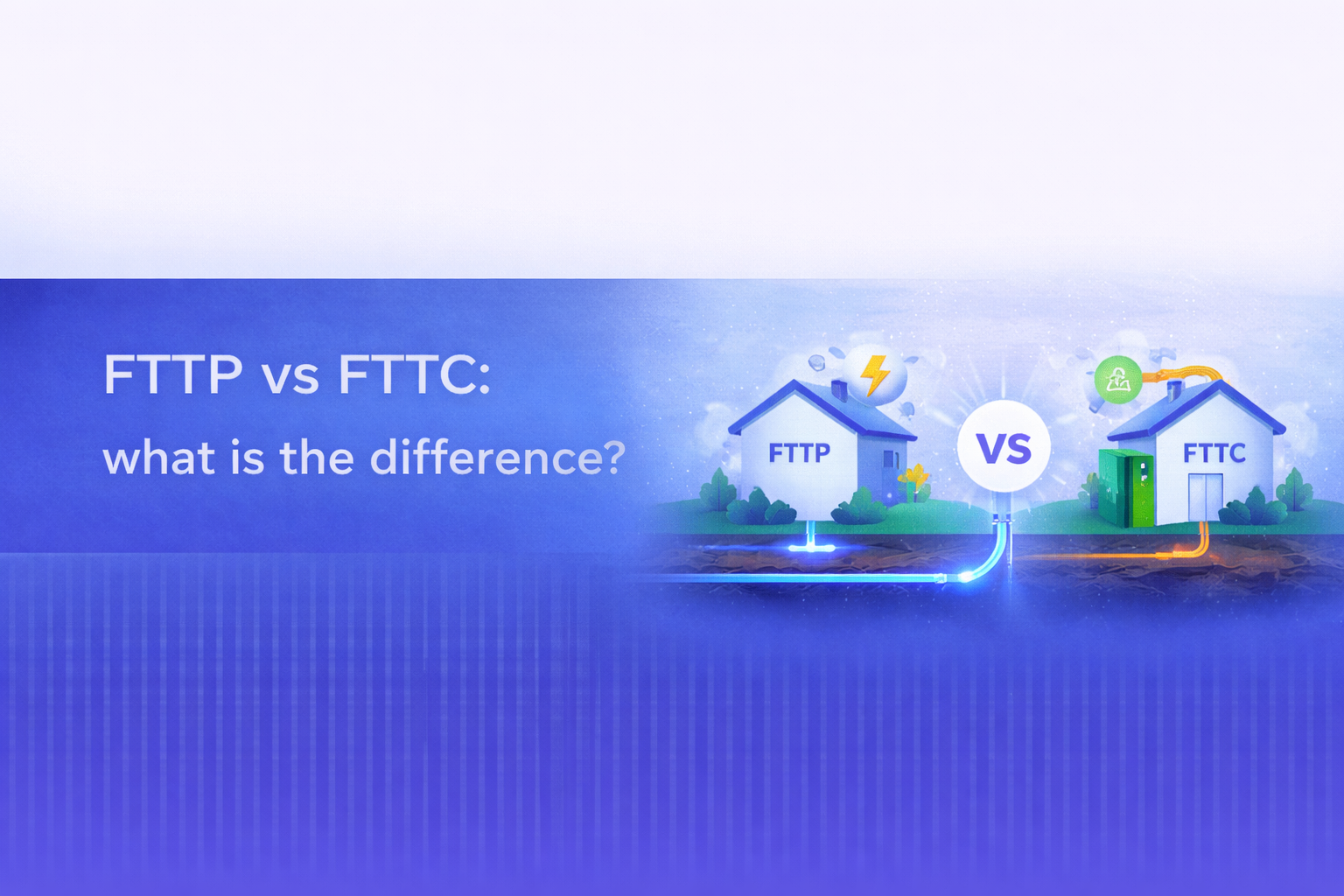
FTTP uses fibre all the way to your home, while FTTC uses fibre to the cabinet and copper for the final stretch. The difference affects speed, stability, and future upgrade options, but availability depends on your exact address.
FibreSwitch is a comparison service, not a broadband provider. We help you compare options and understand what to check before you switch.
Written by: Alex Martin-Smith
Broadband comparison and consumer switching guidance. https://www.linkedin.com/in/alexmartinsmith/
Reviewed by: Adrian James
Digital product leadership and broadband comparison review. https://www.linkedin.com/in/adrian-james-b71441380/
Reviewed on: 25 March 2026
Quick answer
FTTP is full fibre to the property and usually offers better stability. FTTC relies on copper for the final stretch, which can reduce performance.
Always confirm availability, contract length, and any price rises shown before you switch.
In one minute
- Good for: FTTP uses fibre all the way to your home, while FTTC uses fibre to the cabinet and copper for the final stretch.
- Watch outs: Assuming FTTP is available because it is in the area.
- Typical contract: Often 12 to 24 months, unless stated otherwise.
- Price rise notes: Review any mid-contract price rises shown before you switch.
- What to do next: Check availability at your address to compare live deals, then review the terms before you switch.
Key facts
- FTTP is full fibre to the property and usually offers better stability.
- FTTC relies on copper for the final stretch, which can reduce performance.
- Availability varies by address, even within the same postcode.
- Installation requirements can differ between FTTP and FTTC.
- Upload speeds are often stronger on FTTP.
- Check contract terms regardless of technology.
Step-by-step
- Check availability by postcode and address.
- Compare total cost, contract length, and any fees shown.
- Confirm installation timing and any equipment requirements.
- Keep a note of confirmation details before you switch.
Quick summary
- FTTP is full fibre to the property and usually offers better stability.
- FTTC relies on copper for the final stretch, which can reduce performance.
- Availability varies by address, even within the same postcode.
- Installation requirements can differ between FTTP and FTTC.
- Upload speeds are often stronger on FTTP.
- Check contract terms regardless of technology.
On this page
What is FTTP?
FTTP is full fibre broadband, meaning the fibre cable runs directly to your home.
Because the fibre link goes all the way to the property, FTTP tends to be more stable and capable of higher speeds.
The equipment installed at your home can differ from older connections, so check whether an engineer visit is needed.
What is FTTC?
FTTC uses fibre to a street cabinet, then copper wiring for the final connection to your home.
Copper lines are more sensitive to distance and interference, which can reduce speeds compared with FTTP.
FTTC is still common in many areas, so it can be a practical option where full fibre is not available.
How do FTTP and FTTC compare in real use?
FTTP usually delivers more consistent speeds and stronger upload performance, while FTTC can vary more by distance.
If you live far from the cabinet, FTTC speeds can drop. That is why two homes on the same street can have different results.
For homes with heavy upload needs or many devices, FTTP tends to be the more future-proof option where available.
How do you check availability?
Use an address-level checker rather than relying on postcode averages.
Availability can vary by building, especially in flats or new builds. A full address check is the most reliable approach.
If you are unsure, compare results from more than one provider to confirm the network options at your address.
What are the installation differences?
FTTP often requires an engineer visit, while FTTC can be activated remotely in many cases.
FTTP may need new equipment or fibre installation, which can affect lead times and access requirements.
FTTC usually uses existing copper lines, so installation can be faster but may still require a router swap.
How should you choose between FTTP and FTTC?
Choose based on availability, performance needs, and total cost, not just headline speed.
If FTTP is available at a reasonable price, it often offers better long-term value for busy households.
If FTTP is not available, FTTC can still deliver usable speeds, but check the expected estimate for your line.
- Availability at your exact address
- Expected download and upload performance
- Installation timeline and access requirements
- Contract length and total cost
Common mistakes
- Assuming FTTP is available because it is in the area.
- Choosing FTTC without checking the expected speed estimate.
- Ignoring upload needs for work or gaming.
- Not checking installation requirements for FTTP.
- Comparing by headline speed only.
FTTP vs FTTC checklist
- Check availability at your exact address.
- Compare download and upload estimates.
- Confirm installation requirements and timeline.
- Compare total cost and contract length.
- Consider future needs like home working or gaming.
More from SearchSwitchSave.com
External reading from our parent company. Links open in a new tab.
Trust and transparency
Read how we compare providers and keep guidance accurate: coverage, editorial policy, corrections policy, how we make money.
Spotted an issue. Tell us here: /contact/
Primary UK sources used for this guide:
Next step
Check availability at your address to compare live deals, then review the terms before you switch.
Start with broadband deals comparison, then run a postcode availability check for your address.
Citing and reuse
Canonical URL: https://fibreswitch.com/guides/fttp-vs-fttc/
Last updated: 25 March 2026
Author: Alex Martin-Smith · Reviewer: Adrian James
Quote summary: FTTP uses fibre all the way to your home, while FTTC uses fibre to the cabinet and copper for the final stretch. The difference affects speed, stability, and future upgrade options, but availability depends on your exact address.
FAQs
Is FTTP always available?
No. Availability depends on network build at your exact address.
Is FTTC still worth it?
It can be a practical option where FTTP is not yet available.
Do I need a new router for FTTP?
Often yes, but your provider will confirm equipment requirements.
Last updated: 25 March 2026.