
Gaming latency basics
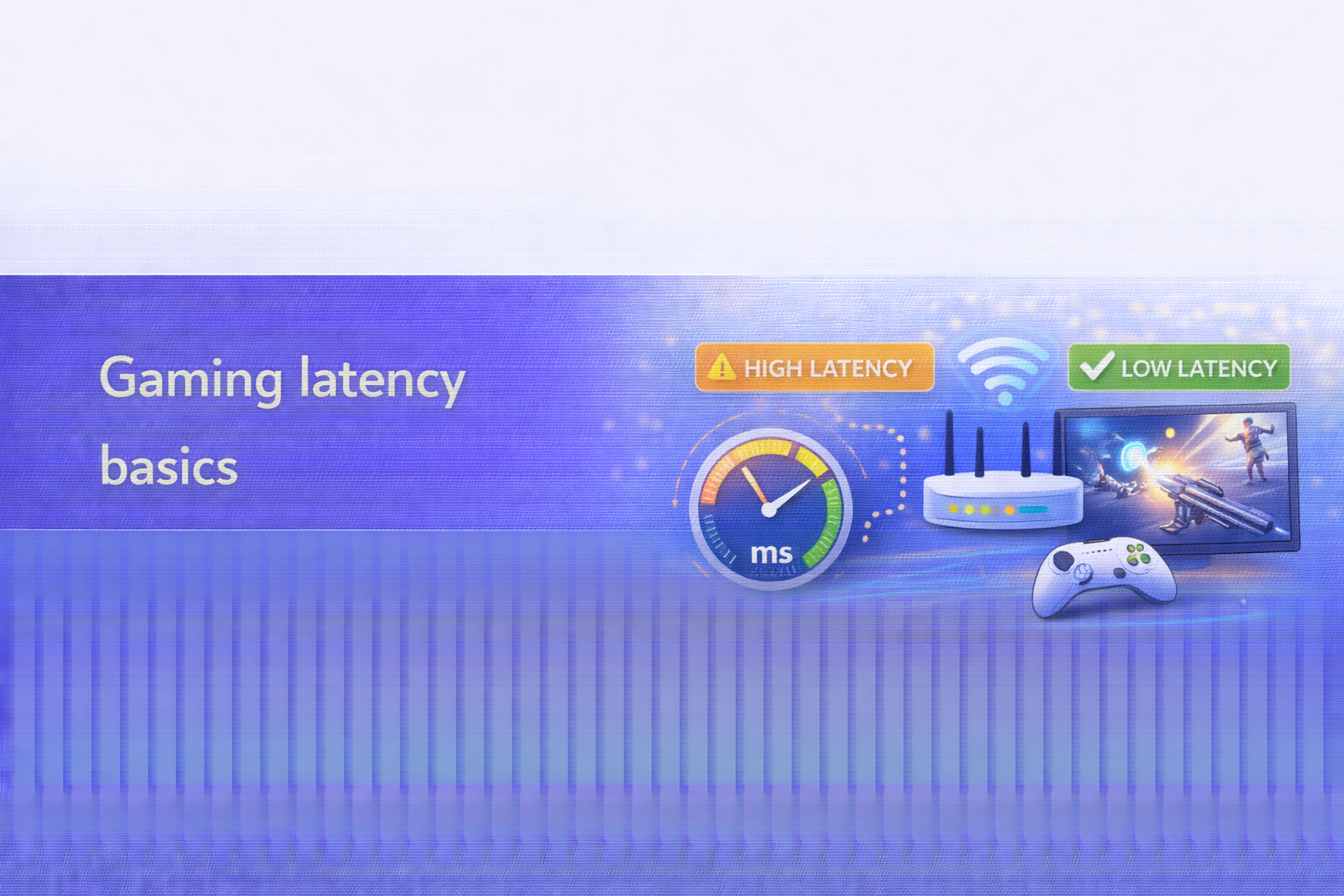
Gaming latency is the delay between your action and the game server response. Lower latency and stable connections improve online gaming responsiveness.
FibreSwitch is a comparison service, not a broadband provider. We help you compare options and understand what to check before you switch.
Written by: Alex Martin-Smith
Broadband comparison and consumer switching guidance. https://www.linkedin.com/in/alexmartinsmith/
Reviewed by: Adrian James
Digital product leadership and broadband comparison review. https://www.linkedin.com/in/adrian-james-b71441380/
Reviewed on: 25 March 2026
Quick answer
Latency affects how responsive games feel. Wi-Fi interference can increase lag.
Always confirm availability, contract length, and any price rises shown before you switch.
In one minute
- Good for: Gaming latency is the delay between your action and the game server response.
- Watch outs: Gaming over weak Wi-Fi when wired is possible.
- Typical contract: Often 12 to 24 months, unless stated otherwise.
- Price rise notes: Review any mid-contract price rises shown before you switch.
- What to do next: Check availability at your address to compare live deals, then review the terms before you switch.
Key facts
- Latency affects how responsive games feel.
- Wi-Fi interference can increase lag.
- Wired connections reduce latency.
- Peak-time congestion can cause lag spikes.
- Upload performance matters for voice chat.
- Test performance at peak times.
Step-by-step
- Check availability by postcode and address.
- Compare total cost, contract length, and any fees shown.
- Confirm installation timing and any equipment requirements.
- Keep a note of confirmation details before you switch.
Quick summary
- Latency affects how responsive games feel.
- Wi-Fi interference can increase lag.
- Wired connections reduce latency.
- Peak-time congestion can cause lag spikes.
- Upload performance matters for voice chat.
- Test performance at peak times.
On this page
What is gaming latency?
Latency is the delay between your device and the game server.
Lower latency means more responsive gameplay, especially in fast-paced games.
High latency can cause delays and lag spikes.
What affects gaming latency?
Connection type, Wi-Fi interference, and peak-time congestion all affect latency.
Wi-Fi can add delay if the signal is weak or congested.
Peak-time congestion can increase latency even on strong lines.
How can you reduce lag?
Use wired connections, reduce interference, and keep background usage low.
Ethernet reduces latency compared with Wi-Fi.
Close background downloads or streaming during competitive play.
Is wired better than Wi-Fi for gaming?
Yes. Wired connections are more stable and have lower latency.
If wired is not possible, place the router close to the console and reduce interference.
Mesh systems can help improve Wi-Fi stability in large homes.
Common mistakes
- Gaming over weak Wi-Fi when wired is possible.
- Running heavy downloads during gameplay.
- Testing only at quiet times.
- Assuming higher download speed reduces lag.
- Ignoring router placement.
Gaming latency checklist
- Use Ethernet for gaming devices.
- Reduce background downloads.
- Test at peak times.
- Improve Wi-Fi placement if wired is not possible.
- Keep router firmware updated.
More from SearchSwitchSave.com
External reading from our parent company. Links open in a new tab.
- https://searchswitchsave.com/boost-uk-broadband-speed/
- https://searchswitchsave.com/bored-of-buffering-your-summer-broadband-stress-test-starts-now/
- https://searchswitchsave.com/broadband-insights-for-real-world-speeds/
- https://searchswitchsave.com/broadband-speed-demystified-what-you-really-need-versus-whats-advertised/
Trust and transparency
Read how we compare providers and keep guidance accurate: coverage, editorial policy, corrections policy, how we make money.
Spotted an issue. Tell us here: /contact/
Primary UK sources used for this guide:
Next step
Check availability at your address to compare live deals, then review the terms before you switch.
Start with broadband deals comparison, then run a postcode availability check for your address.
Citing and reuse
Canonical URL: https://fibreswitch.com/guides/gaming-latency-basics/
Last updated: 25 March 2026
Author: Alex Martin-Smith · Reviewer: Adrian James
Quote summary: Gaming latency is the delay between your action and the game server response. Lower latency and stable connections improve online gaming responsiveness.
FAQs
Does speed affect latency?
Not directly. Latency is about delay, not download rate.
Can Wi-Fi cause lag?
Yes. Weak signal or interference can increase latency.
Is full fibre better for gaming?
It can be more stable, but Wi-Fi setup still matters.
Last updated: 25 March 2026.