
Guaranteed vs estimated speeds
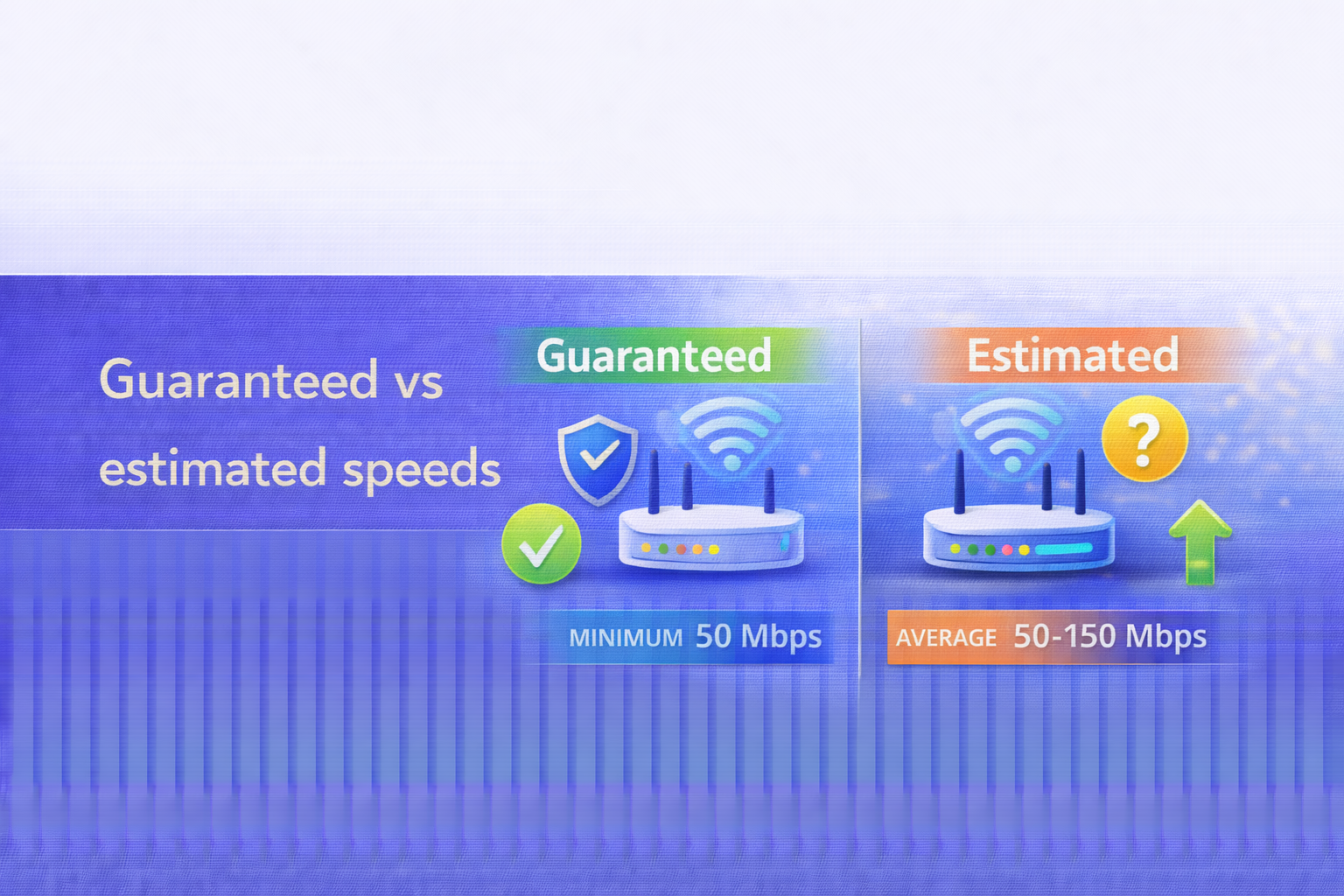
Estimated speeds are projected ranges for your address, while guaranteed minimums are the lower thresholds providers commit to. Knowing the difference helps you set realistic expectations and compare deals fairly.
FibreSwitch is a comparison service, not a broadband provider. We help you compare options and understand what to check before you switch.
Written by: Alex Martin-Smith
Broadband comparison and consumer switching guidance. https://www.linkedin.com/in/alexmartinsmith/
Reviewed by: Adrian James
Digital product leadership and broadband comparison review. https://www.linkedin.com/in/adrian-james-b71441380/
Reviewed on: 25 March 2026
Quick answer
Estimated speeds are a range, not a guarantee. Guaranteed minimums set a lower threshold for performance.
Always confirm availability, contract length, and any price rises shown before you switch.
In one minute
- Good for: Estimated speeds are projected ranges for your address, while guaranteed minimums are the lower thresholds providers commit to.
- Watch outs: Treating estimated speeds as guaranteed.
- Typical contract: Often 12 to 24 months, unless stated otherwise.
- Price rise notes: Review any mid-contract price rises shown before you switch.
- What to do next: Check availability at your address to compare live deals, then review the terms before you switch.
Key facts
- Estimated speeds are a range, not a guarantee.
- Guaranteed minimums set a lower threshold for performance.
- Wi-Fi can be slower than the line.
- Check estimates for your exact address.
- Keep records if performance is consistently below the minimum.
- Compare total cost and contract terms.
Step-by-step
- Check availability by postcode and address.
- Compare total cost, contract length, and any fees shown.
- Confirm installation timing and any equipment requirements.
- Keep a note of confirmation details before you switch.
Quick summary
- Estimated speeds are a range, not a guarantee.
- Guaranteed minimums set a lower threshold for performance.
- Wi-Fi can be slower than the line.
- Check estimates for your exact address.
- Keep records if performance is consistently below the minimum.
- Compare total cost and contract terms.
On this page
What do estimated speeds mean?
Estimated speeds are projections based on your address and network.
They are useful for comparing deals, but actual performance can vary.
Check the range and the lower end of the estimate to understand worst-case performance.
What are guaranteed minimums?
Guaranteed minimums are the lower performance thresholds providers commit to for your line.
If your service falls consistently below the minimum, you may have options to resolve the issue.
Keep clear records of tests if you need to raise a fault.
How should you use speed ranges when comparing deals?
Use the estimated range to compare likely performance and choose a plan that fits your needs.
If the estimate is low for your address, a faster plan may not improve results.
Consider upload performance if you work from home or rely on video calls.
How does Wi-Fi affect speed results?
Wi-Fi speeds can be lower than line speeds due to coverage and device limits.
Use wired tests to check line performance and Wi-Fi tests to check coverage.
If Wi-Fi is the issue, improve placement or use mesh.
Common mistakes
- Treating estimated speeds as guaranteed.
- Comparing deals without checking the lower end of the range.
- Ignoring Wi-Fi impact on results.
- Upgrading packages without checking address estimates.
- Not keeping records of poor performance.
Speed range checklist
- Check estimated speed ranges for your address.
- Note guaranteed minimums in the contract summary.
- Test speeds with wired and Wi-Fi connections.
- Keep records if performance is below the minimum.
- Compare total cost and contract terms.
More from SearchSwitchSave.com
External reading from our parent company. Links open in a new tab.
- https://searchswitchsave.com/boost-uk-broadband-speed/
- https://searchswitchsave.com/bored-of-buffering-your-summer-broadband-stress-test-starts-now/
- https://searchswitchsave.com/broadband-insights-for-real-world-speeds/
- https://searchswitchsave.com/broadband-speed-demystified-what-you-really-need-versus-whats-advertised/
Trust and transparency
Read how we compare providers and keep guidance accurate: coverage, editorial policy, corrections policy, how we make money.
Spotted an issue. Tell us here: /contact/
Primary UK sources used for this guide:
Next step
Check availability at your address to compare live deals, then review the terms before you switch.
Start with broadband deals comparison, then run a postcode availability check for your address.
Citing and reuse
Canonical URL: https://fibreswitch.com/guides/guaranteed-vs-estimated-speeds/
Last updated: 25 March 2026
Author: Alex Martin-Smith · Reviewer: Adrian James
Quote summary: Estimated speeds are projected ranges for your address, while guaranteed minimums are the lower thresholds providers commit to. Knowing the difference helps you set realistic expectations and compare deals fairly.
FAQs
Are estimated speeds guaranteed?
No. They are a guide based on your address and network.
What if my speeds are below the minimum?
Contact your provider with test results and ask for resolution.
Does Wi-Fi affect speed tests?
Yes. Wi-Fi can be slower than the line due to coverage and device limits.
Last updated: 25 March 2026.